
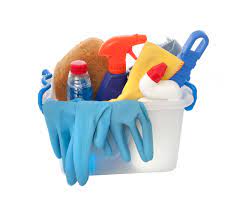
Cleaning is more than removing debris and bacteria from a surface.
Cleaning is about the air we inhale while debris and bacteria is being removed from a surface. As you may have remembered from my last post, I try to use non-toxic cleaners as much as possible. You can find that post here.
There are oodles of cleaning sprays, creams, powders, and surfactants on the market, both conventional and “safe,” or natural. While several of the “safe” ones deserve a place in this post, not every consumer has the money to afford safe cleaning products, which do tend to be on the pricier side. However, some of the most basic disinfectants become overlooked in our quest for safe and natural. Disinfectants like isopropyl alcohol, hydrogen peroxide, and, arguably, white vinegar. With the right combinations and a great spray bottle, anyone can make their own cleaning products from home.
It would be silly of me not to start with a DIY all-purpose spray, because the power is in the name – all-purpose!
My favorite all-purpose spray is a simple combination of 70% isopropyl alcohol, Sal’s Suds (or any castile soap), and water. This combination can be sprayed on almost any surface, even stone countertops. I use it on refrigerators, bathtubs, toilets, windows, and everywhere in-between. When left on a surface for 30 seconds, isopropyl alcohol disinfects. The castile soap of choice serves as your surfactant.
What is a surfactant? A surfactant is a soap, basically. It provides scrubbing power and removes particles from surfaces. However, surfactants, or soap, do not disinfect. I choose to use Sal’s Suds, made by Dr. Bronner’s, because it’s gentle on my skin, it’s cruelty-free, it’s non-toxic, and it’s incredibly concentrated. Because it’s heavily concentrated, I only use 2-3 squirts of solution per 32 oz. spray bottle. A 32 oz. bottle of Sal’s Suds will last for, in the words of Squints, “For-ev-errrr.”
Now that we’ve talked about what goes into a natural all-purpose spray, let’s reign it in and divulge the recipe –
All-Purpose Spray Recipe:
- 1/4 cup 70% isopropyl alcohol
- 2-3 squirts of Sal’s Suds (or another Dr. Bronner’s soap)
- Water
- A 32 oz. spray bottle (I like these)
- Microfiber cloth
- 2-4 drops of essential oil of your choice
Dusting is as easy as 1-2-3. However, there are times to “dry dust” and times to “damp dust.” It’s important to know what material your dusty surface is before you choose damp dusting. Below, I share what I use for both dry and damp dusting.
For damp dusting, I make a spray bottle with vinegar, water, and (sometimes) olive oil, and spray it directly onto my microfiber cloth.
For dry dusting, I use a Swiffer extendable duster, but I choose to use reusable dusting cloths on the base instead of the disposable. The reusable dusters are easy to wash in the laundry machine and then air dry.
Dusting Recipe:
- 1:2 ratio of white vinegar to water
- A 32 oz. spray bottle (I like these)
- Swiffer Extendable Dusting starter kit
- Reusable dry dusters
- Microfiber cloth
- For wood only – add 1/4 cup olive oil
Shower glass and window glass can be plagued with mineral build-up and hard water. My favorite DIY cleaner for these surfaces is to add some Dawn, vinegar, and a little water to a spray bottle and saturate the entire surface. Take a Scour Daddy and scrub, then allow it to sit. The vinegar needs time to eat away at the mineral build-up! After 15-30 minutes, rinse with cool water, squeegee, and polish with a carbon microfiber cloth.
For mirrors, all you need is a damp Polishing cloth (not wet!) and you can perfect any mirror, no chemicals needed.
Shower & Glass Cleaner:
- 2:3:1 ratio of Dawn or Sal’s Suds, white vinegar, and water
- A 32 oz. spray bottle (I like these)
- Scour Daddy for scrubbing
- Polishing cloth for…um…polishing
These are my favorite non-toxic DIY recipes for cleaning, and I use them daily. Every product that I listed a link to is a product that I use and love. Unfortunately, Dawn is not a toxin-free cleaner! I encourage you to use Sal’s Suds in place of Dawn, but, sometimes, Dawn just cuts through build-up better. The choice is yours.
Have you tried any of these recipes? Do you have a favorite recipe that includes hydrogen peroxide (a natural product I have not had great success with)? Let me know below!

 honeysucklehabits.com